AI Is Fighting Counterfeit Food in the Mediterranean
Artificial Intelligence
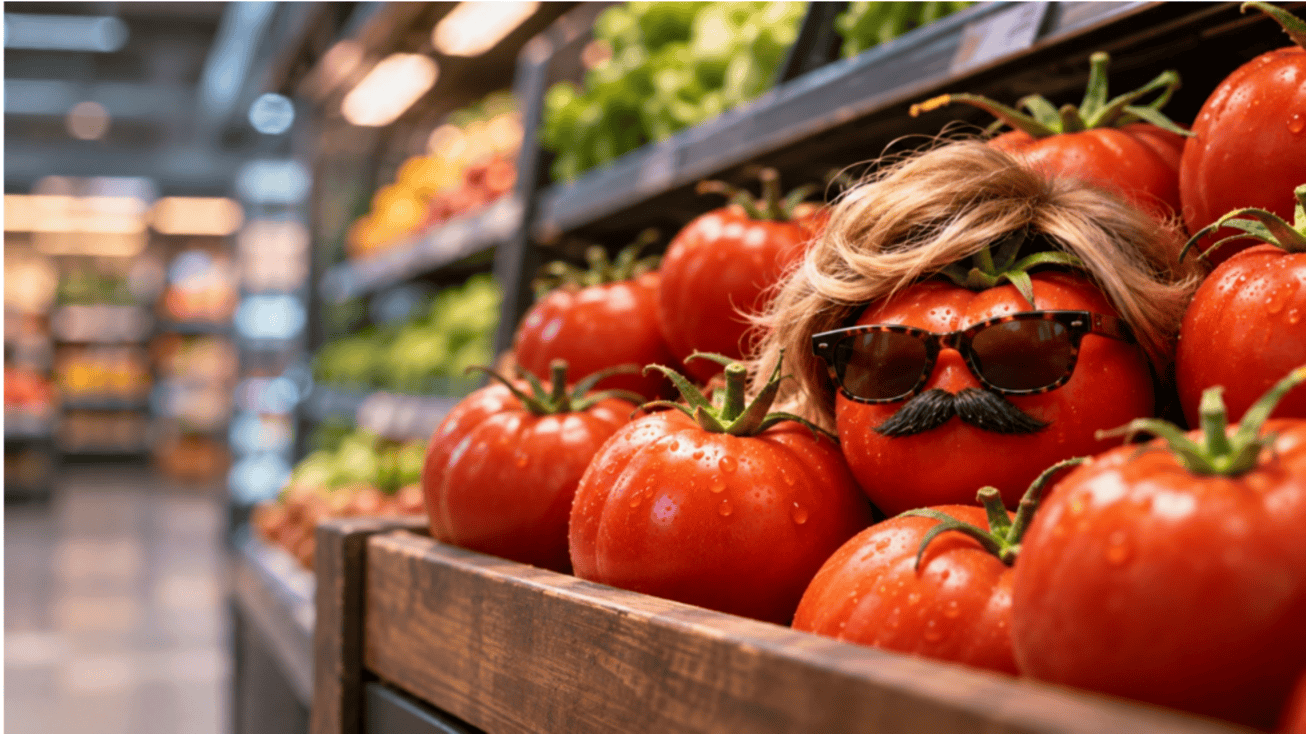
Italy takes its food seriously. Very seriously.
Put pineapple on a pizza, break spaghetti in half, or suggest that Parmesan and Parmigiano Reggiano are interchangeable, and you're asking for trouble.
But behind the culinary pride lies a much more expensive problem: food fraud.
The European Commission has cited estimates putting the annual cost of food fraud across the EU at €8–12 billion, approximately US$9–14 billion.
And counterfeiters aren't limiting themselves to finished products. They're targeting the agricultural supply chain itself, including the seeds that determine what eventually reaches our plates.
In December 2024, Italian authorities seized 263 tonnes of counterfeit or mislabelled tomato and chilli seeds, including products falsely marketed under prestigious Italian varieties.
For a country whose food exports depend heavily on authenticity, reputation and quality, that's a serious commercial concern.
And now, researchers are bringing some surprisingly sophisticated technology into the food supply chain.
How AI Is Detecting Counterfeits
On 17 September 2026, a European research consortium launched CUSTOMICS in Rome, a three-year initiative with approximately US$3.2 million in funding.
Its mission? Develop advanced technologies to help customs authorities identify counterfeit seeds, detect biological threats and protect agricultural supply chains.
The project combines genomic analysis, artificial intelligence, cybersecurity and digital technologies to develop more effective inspection and authentication methods.
By analysing the biological characteristics of seeds, researchers aim to help authorities distinguish authentic agricultural products from suspicious or misrepresented material.
It's an increasingly important capability for agricultural trade.
Because when the value of a product depends on where it comes from, what it contains and whether it meets strict quality standards, verifying authenticity becomes a commercial necessity.
Protecting The Price Of Premium
Consumers around the world pay premiums for products associated with particular regions, ingredients, production methods and quality standards.
That reputation supports farmers, manufacturers, exporters, distributors and entire regional economies.
Counterfeiting threatens that value at multiple points in the supply chain.
For legitimate producers, better authentication technologies could help protect product integrity and market access.
For importers and distributors, improved verification could reduce exposure to fraudulent goods and costly supply-chain disruptions.
For regulators, more sophisticated inspection tools could make it easier to identify suspicious shipments before they enter the market.
And for technology companies, those challenges represent an expanding range of potential customers.
CUSTOMICS is one example of how Europe's agricultural sector is investing in technologies that could make authenticity easier to verify.
The Business Of Keeping It Real
The commercial applications extend well beyond identifying suspicious tomato seeds.
As food producers, exporters and regulators seek stronger ways to verify agricultural products, several technology markets stand to benefit:
- AI and machine learning: Develop systems that analyse biological data, identify anomalies and support faster inspection decisions.
- Biotechnology and genomics: Create molecular testing and authentication tools for agricultural products and raw materials.
- Supply-chain technology: Build traceability platforms connecting producers, processors, distributors and importers.
- Cybersecurity and data integrity: Protect sensitive agricultural records, inspection results and digital product identities.
- Testing and certification: Develop verification services for businesses seeking to demonstrate authenticity and compliance.
These applications create potential demand from food manufacturers, agricultural cooperatives, logistics companies, customs authorities and certification bodies.
For innovators, the opportunity lies in turning complex scientific capabilities into practical, affordable solutions that businesses can deploy throughout their supply chains.
And for the Mediterranean, where agricultural heritage, regional specialities and international food trade are deeply interconnected, protecting authenticity has implications far beyond any single product.
The Future Of Food Has A Tech Problem To Solve
Italy has spent generations establishing the value of its food.
Maintaining that value in a global marketplace increasingly requires technology capable of protecting what makes those products distinctive.
From identifying counterfeit seeds to verifying supply-chain records, the demand for better authentication creates commercial opportunities across AI, biotechnology, cybersecurity and digital infrastructure.
At GITEX AI Mediterranean/Italy, 21–22 April 2027 in Rome, technology innovators, startups, investors and industry decision-makers will come together to explore solutions addressing the region's commercial and industrial challenges.
For companies developing AI, biotech and traceability technologies, the event provides a platform to engage potential enterprise customers, pursue distribution and research partnerships, and connect with investors supporting commercially viable innovation.
Because when an industry's reputation is worth billions, protecting authenticity is serious business.
And sometimes, that business starts with a tomato.
About GITEX AI Mediterranean/Italy
GITEX AI Mediterranean/Italy is an artificial intelligence and technology exhibition taking place on 21–22 April 2027 at The Roma Convention Center La Nuvola in Rome, Italy. The event connects enterprises, startups, investors and government leaders from Italy, Europe and the Mediterranean with global technology companies to explore commercial partnerships, investment and technology adoption.
Part of the global GITEX network, the event is co-organised with Italy’s Ministry of Foreign Affairs and International Cooperation, the Ministry of Enterprises and Made in Italy, Lazio Region and Lazio Innova. It brings Italy’s industrial expertise, design capabilities and research community into an international technology marketplace.